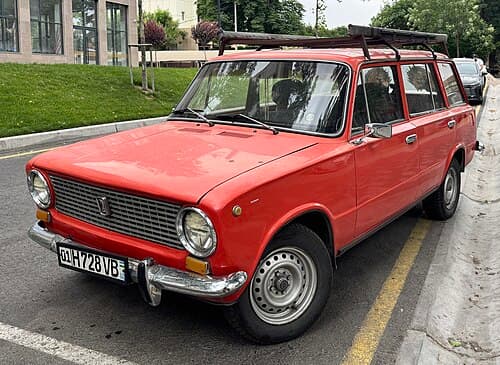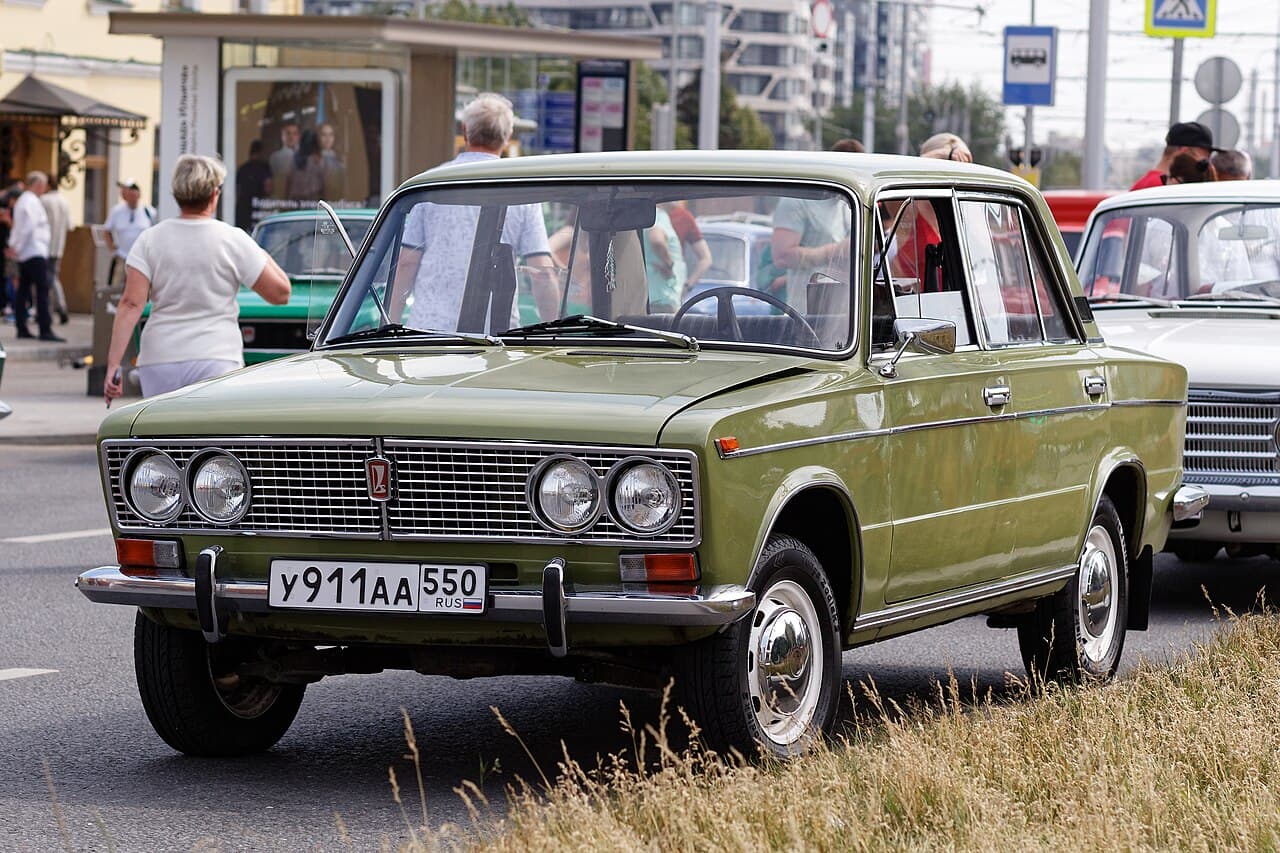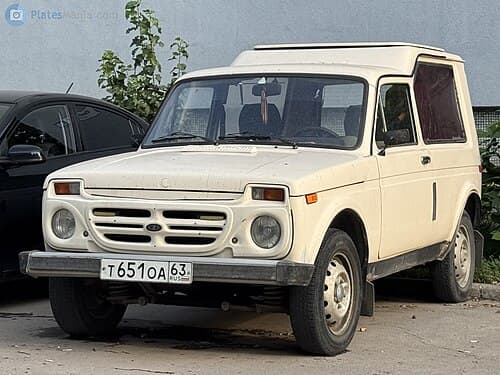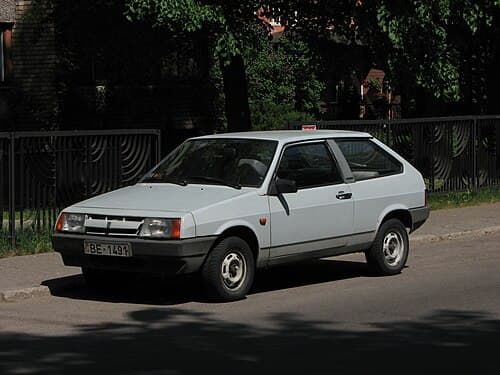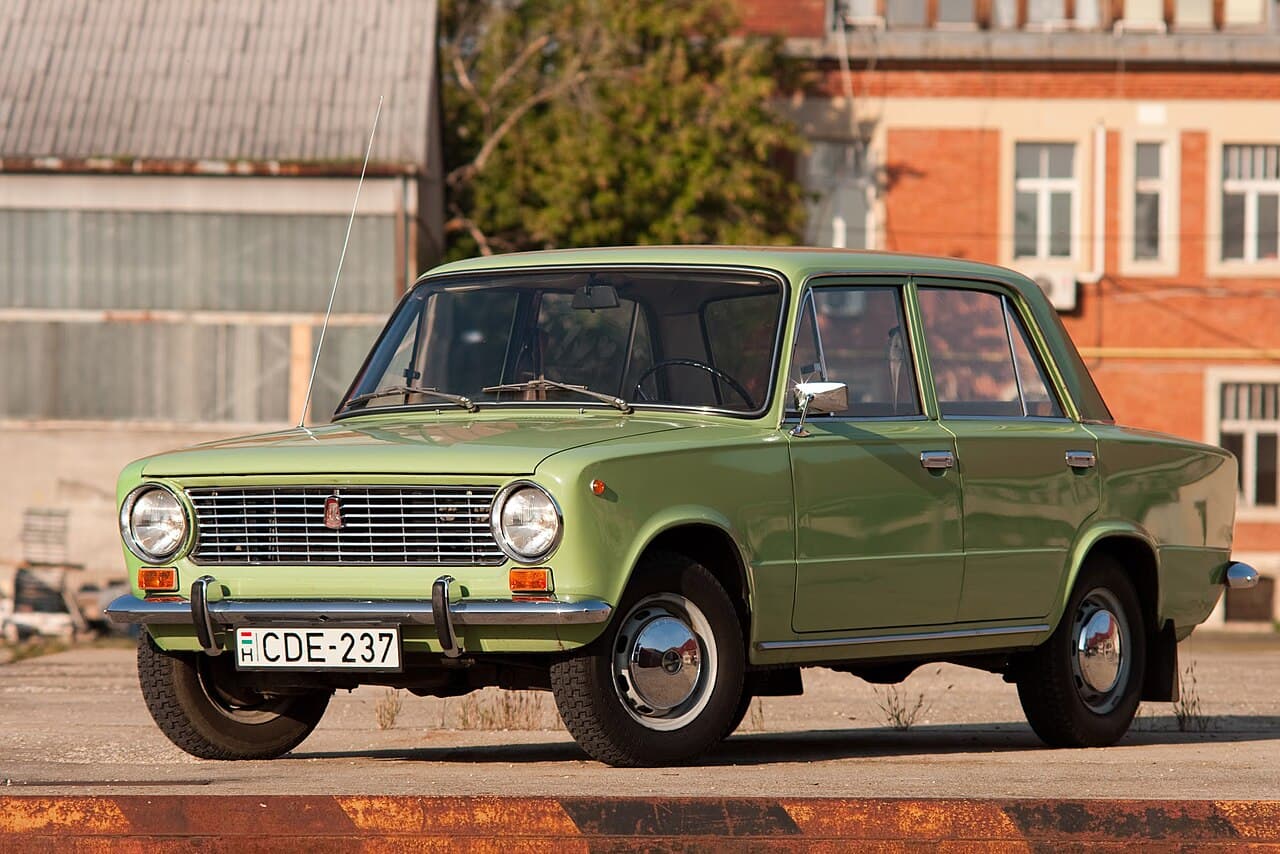
VAZ-2101 Zhiguli
History
The most numerous car in Soviet history — the famous “kopeyka”. Based on the Fiat 124, with some 800 changes for Russian conditions, and built in millions over eighteen years.
In 1966 the USSR and Fiat signed a contract for a giant car plant in Tolyatti. The Fiat 124 was chosen as the base, but received more than 800 changes for Soviet conditions: drum rear brakes instead of discs, strengthened suspension, an overhead-camshaft engine in place of the Fiat pushrod unit, greater ground clearance and better insulation. The first VAZ-2101 left the line on 19 April 1970. The “kopeyka” — nicknamed after its 01 index — became the country's most popular car. Waiting lists ran for years, and the postcard announcing your right to buy was a family occasion.
Production
- Production years
- 1970–1988
- Total built
- 4,800,000+ units
- Price
- 5,500 roubles
- Designer
- Dante Giacosa (Fiat) and Soviet engineers
Specifications
- Engine
- 1198 cc, 4 cyl.
- Power
- 64 hp
- Top speed
- 142 km/h
- 0–100 km/h
- 20 s
- Gearbox
- 4-speed
- Drive
- Rear
- Weight
- 955 kg
- Fuel consumption
- 8 l/100 km
Data sheet
- Production period
- from 1970
- Dimensions (L × W × H)
- 4073 × 1611 × 1440 mm
- Seats
- 5
- Kerb weight
- 955 kg
- Gross weight
- 1355 kg
- Wheelbase
- 2424 mm
- Ground clearance
- 170 mm
- Top speed
- 140 km/h
- Fuel consumption
- 8 l/100 km
- Engine
- VAZ-2101, carburettor, four-stroke, four-cylinder, with an overhead camshaft
- Displacement
- 1.19 l
- Compression ratio
- 8.8
- Maximum power
- 62 hp
- Clutch
- single-plate, dry, with hydraulic release
- Gearbox
- four-speed
- Final drive
- single, hypoid
- Steering gear
- globoid worm and twin-ridge roller
- Tyre size
- 6,15-13
Source: the autoussr.ru reference archive
Around 800 changes compared with the Fiat 124
The nickname “kopeyka” comes from the 01 index
Waiting lists ran for five to seven years
Exported under the Lada name
A whole city was built in Tolyatti for the plant's workers
The purchase notice — the “postcard” — was a family celebration