Perestroika and the Last Legends
The last decade of the USSR. With advice from Porsche, VAZ creates the front-wheel-drive “vosmyorka”. AZLK launches the ambitious 2141, but the economic crisis never lets it reach its potential. The Moscow Olympics, perestroika, glasnost, the fall of the Berlin Wall — and the end of the Soviet Union in December 1991.
Historical background
1980: the Moscow Olympics. 1985: Gorbachev launches perestroika. 1986: Chernobyl. 1989: the Berlin Wall falls. 1991: the USSR dissolves. The motor industry tries to modernise, but the economic crisis and the collapse of supply chains kill off many projects.
An average wage is 180–250 roubles a month until 1991. A VAZ-2108 costs 8,300 roubles. The hyperinflation of the early 1990s wipes out savings, waiting lists stretch beyond ten years, and a black market with double and triple prices appears.
Key events
- 1980CultureThe Moscow Olympics
The 22nd Olympic Games; new Volgas and Chaikas are bought for the guests
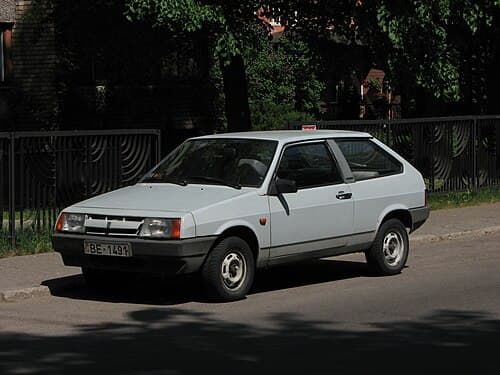
- 1984Model
The first front-wheel-drive VAZ, with chassis tuning help from Porsche
- 1985HistoryPerestroika begins
Mikhail Gorbachev launches the policies of perestroika and glasnost
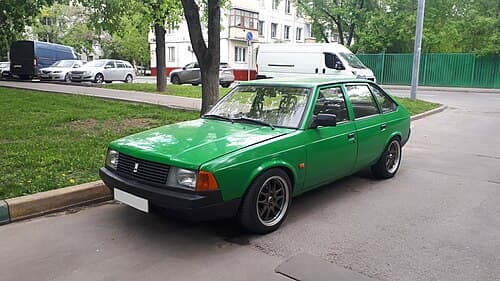
- 1986Model
An ambitious front-wheel-drive hatchback aimed at the VW Golf — but without an engine of its own
- 1991HistoryThe end of the USSR
On 25 December the red flag comes down over the Kremlin and the Soviet era ends