GAZ-21 Volga
History
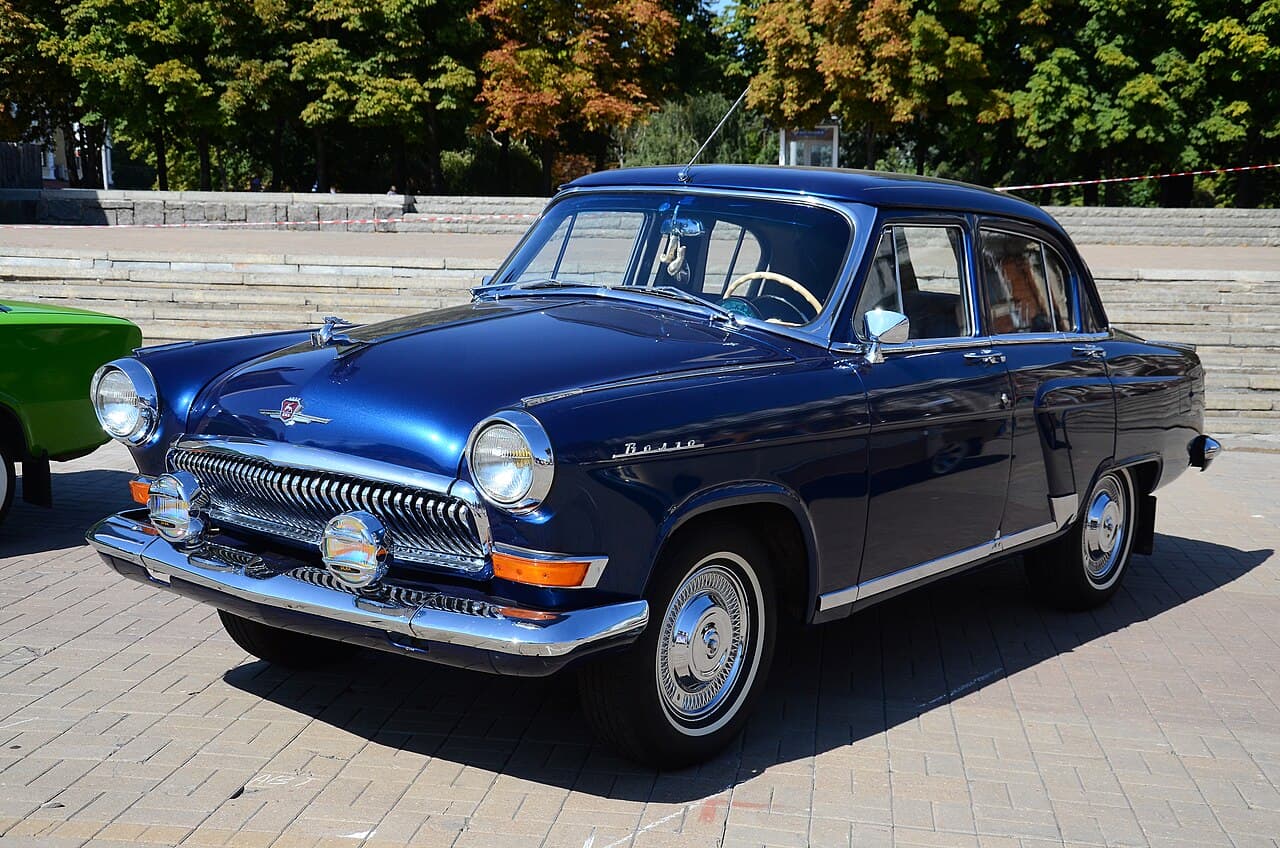
The legendary Volga with a deer on the bonnet. The car of the Thaw — driven by taxi drivers and officials, dreamed of by millions, and still one of the most recognisable Soviet cars in the world.
The GAZ-21 arrived during the Khrushchev Thaw and became a symbol of the changes. The first series (1956–1958) is recognised by the star on its grille, the second by the “shark's mouth” of vertical chrome bars, and the third (1962–1970) by the horizontal “whale bone” grille. The car was famously tough: many Volgas served for thirty or forty years. It was the mainstay of Soviet taxi fleets and was exported to dozens of countries, from Finland to Indonesia.
Production
- Production years
- 1956–1970
- Total built
- 638,875 units
- Price
- 5,100 roubles
- Designer
- Lev Tsikolenko, Alexander Nevzorov
Specifications
- Engine
- 2445 cc, 4 cyl.
- Power
- 75 hp
- Top speed
- 130 km/h
- 0–100 km/h
- 34 s
- Gearbox
- 3-speed
- Drive
- Rear
- Weight
- 1460 kg
- Fuel consumption
- 12 l/100 km
Three series: the “Star”, the “Shark's Mouth” and the “Whale Bone”
An automatic-transmission version existed
The main Soviet taxi of the 1960s
Widely exported, including to Western Europe
Won a Grand Prix at the 1958 World's Fair in Brussels