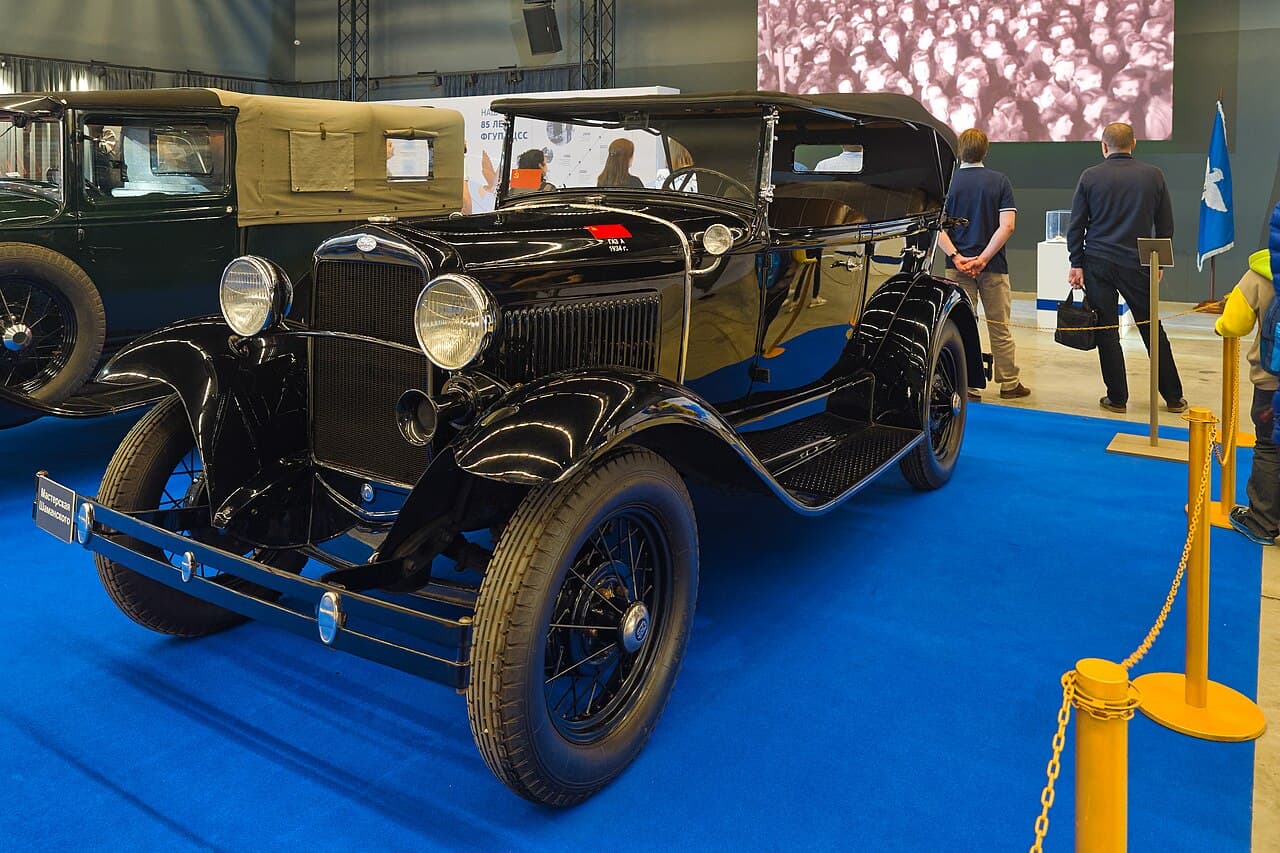
GAZ-A
History
The first mass-produced Soviet passenger car, a licence-built copy of the Ford Model A. Assembly-line motoring in the Soviet Union began with this machine.
In 1929 the USSR signed a contract with the Ford Motor Company to build a car plant in Nizhny Novgorod. The line started in January 1932 with the GAZ-AA truck, and in December of the same year production of the GAZ-A passenger car began. The car was widely used by the army, by taxi fleets and by government offices. Its open phaeton body was hardly ideal for Russian winters, yet it became a symbol of the first five-year plan and of the country's industrialisation.
Production
- Production years
- 1932–1936
- Total built
- 41,917 units
- Designer
- Adapted from the Ford Model A
Specifications
- Engine
- 3285 cc, 4 cyl.
- Power
- 40 hp
- Top speed
- 90 km/h
- 0–100 km/h
- ~30 s
- Gearbox
- 3-speed
- Drive
- Rear
- Weight
- 1080 kg
- Fuel consumption
- 12 l/100 km
Data sheet
- Production period
- 1932–1936
- Seats
- 5
- Kerb weight
- 1080 kg
- Gross weight
- 1430 kg
- Wheelbase
- 2630 mm
- Top speed
- 90 km/h
- Fuel consumption
- 12 l/100 km
- Engine
- carburettor, four-stroke, four-cylinder, side-valve
- Displacement
- 3.28 l
- Compression ratio
- 4.2
- Maximum power
- 40 hp
- Clutch
- single-plate, dry
- Gearbox
- three-speed
- Final drive
- single: a pair of spiral-bevel gears
- Steering gear
- worm and sector
- Tyre size
- 5,50-19
Source: the autoussr.ru reference archive
The first GAZ-A left the line on 8 December 1932
People called it simply “gazik” or “the Ford”
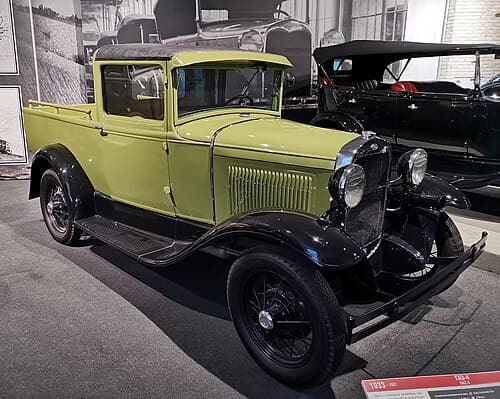
Some cars were rebuilt into GAZ-4 pickups
Production ended in 1936, when the GAZ-M1 took over