GAZ-M1 Emka
History
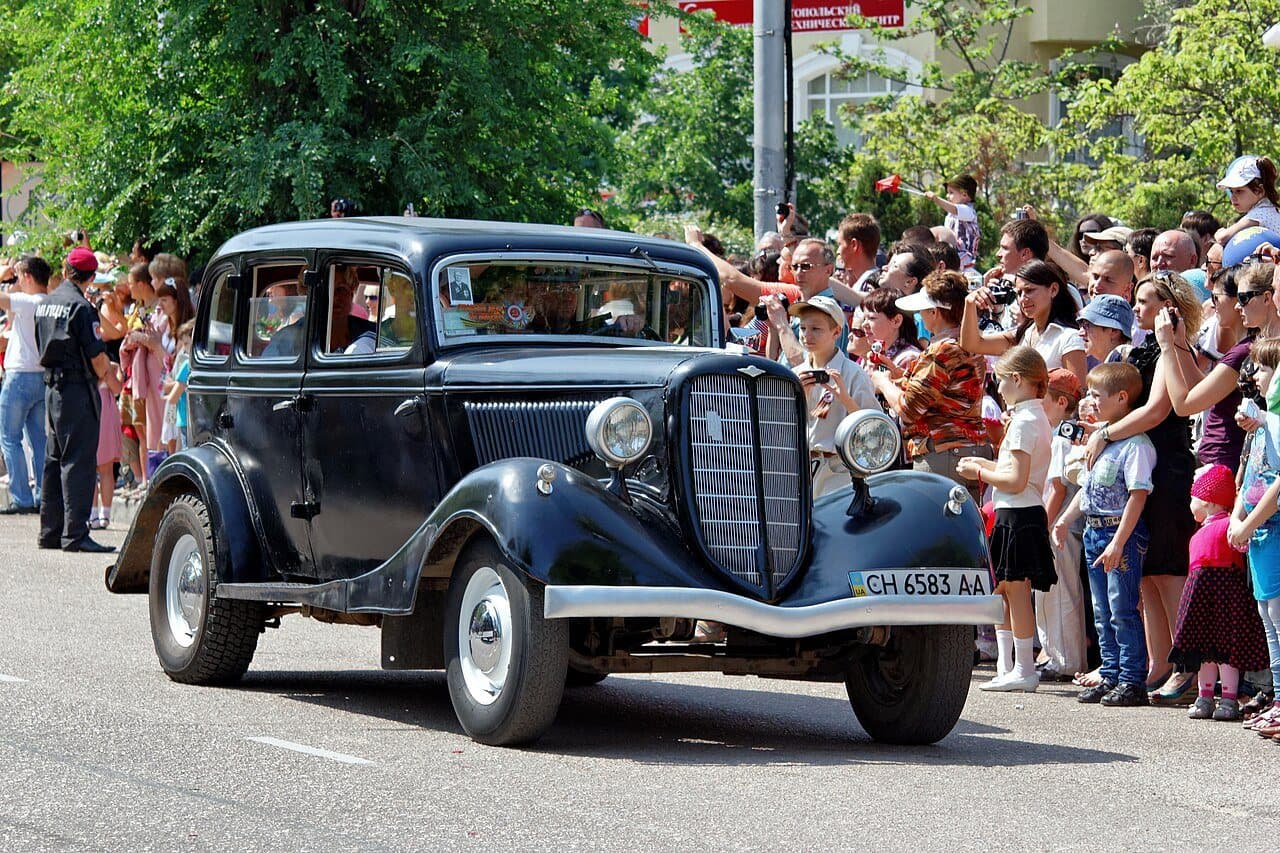
The defining Soviet car of the 1930s. The “Emka” carried party officials, doctors and engineers, and became the emblem of the pre-war years.
The GAZ-M1 was based on the Ford Model B but reworked for Soviet conditions: a strengthened frame, suspension tuned for unpaved roads and a closed all-steel body. The “M” in the name came from Molotov, whose name the plant carried at the time. The car became a fixture of pre-war life — it appears in dozens of Soviet films, doctors drove it on house calls, and the security services used it for their night-time visits. During the war the Emka served as a staff car at the front.
Production
- Production years
- 1936–1943
- Total built
- 62,888 units
- Designer
- Adapted from the Ford Model B
Specifications
- Engine
- 3285 cc, 4 cyl.
- Power
- 50 hp
- Top speed
- 105 km/h
- 0–100 km/h
- ~24 s
- Gearbox
- 3-speed
- Drive
- Rear
- Weight
- 1370 kg
- Fuel consumption
- 14.5 l/100 km
Data sheet
- Production period
- 1936–1940
- Seats
- 5
- Kerb weight
- 1370 kg
- Gross weight
- 1720 kg
- Wheelbase
- 2845 mm
- Top speed
- 100 km/h
- Fuel consumption
- 14.5 l/100 km
- Engine
- carburettor, four-stroke, four-cylinder, side-valve
- Displacement
- 3.28 l
- Compression ratio
- 4.6
- Maximum power
- 50 hp
- Clutch
- single-plate, dry
- Gearbox
- three-speed
- Final drive
- single: a pair of spiral-bevel gears
- Steering gear
- globoid worm and twin-ridge roller
- Tyre size
- 7,00-16
Source: the autoussr.ru reference archive
The “M” stands for Molotov, after the plant's own name
Countless Soviet films feature the Emka
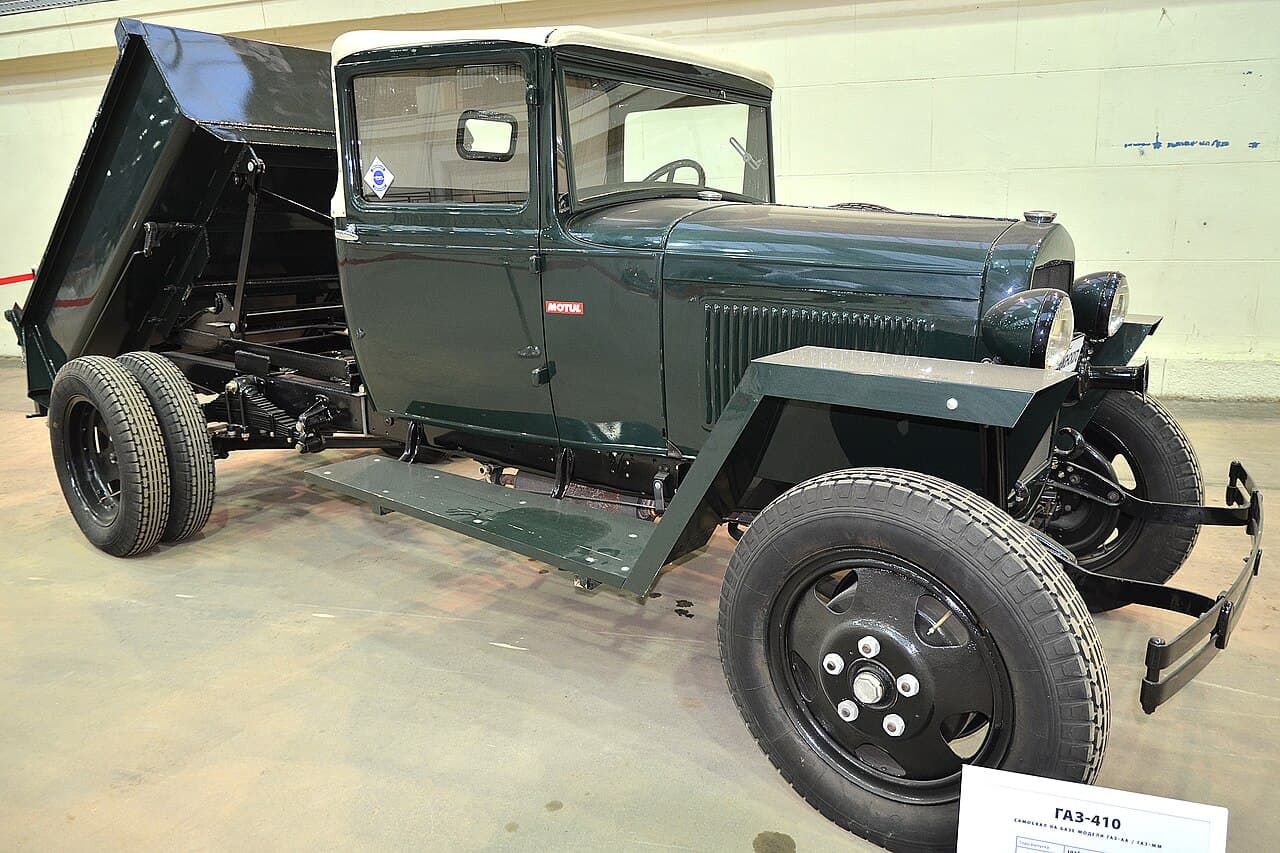
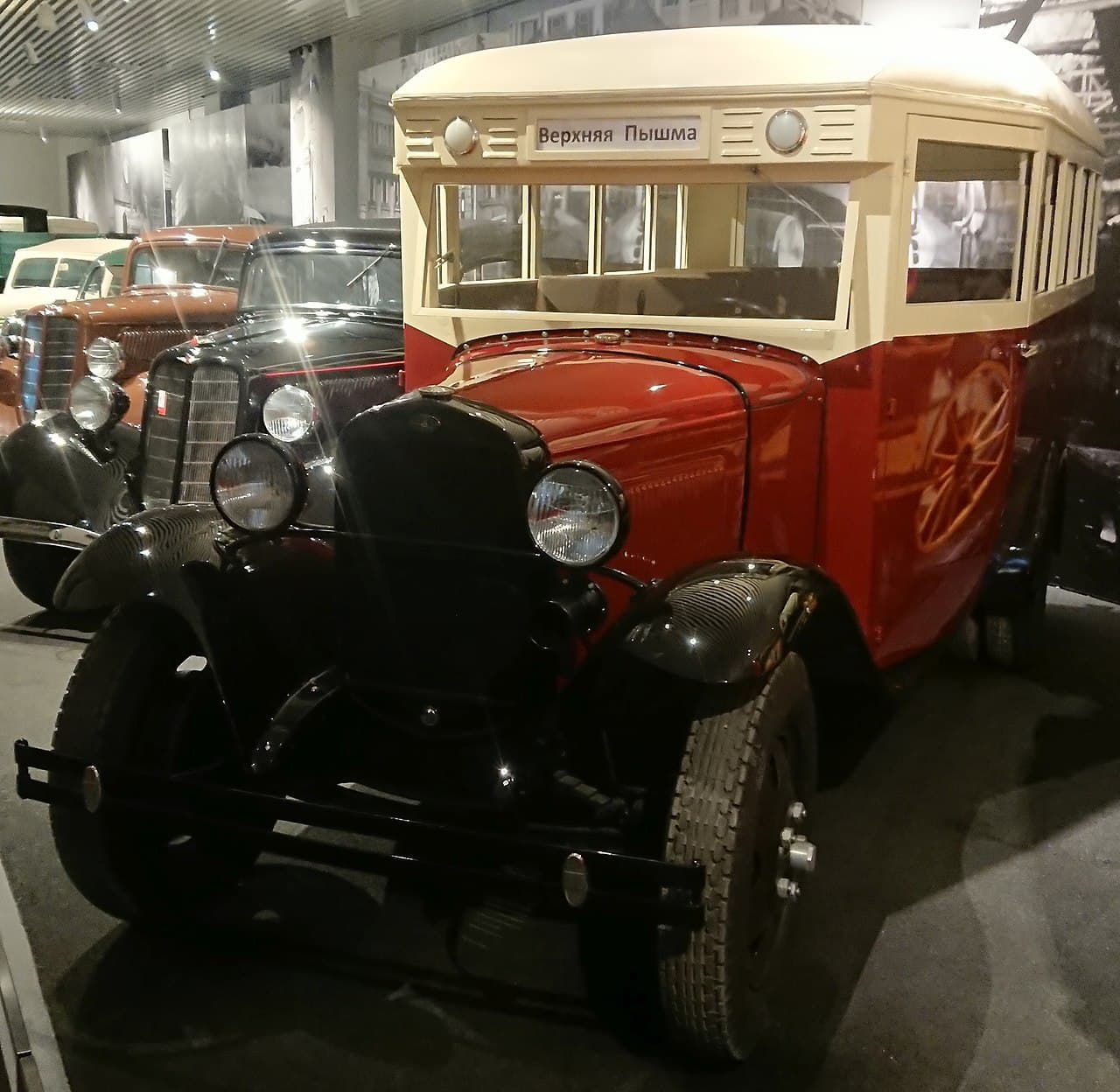
Taxi, pickup, phaeton and four-wheel-drive versions were built
The GAZ-61, the first Soviet four-wheel-drive car, grew out of the M1